
Categorized Museum Collections Across the United States
A working directory of American cultural institutions, organized by collection type so you can find the right expertise — whether you are planning a visit or conducting research.
Orientation
The United States holds thousands of cultural institutions — encyclopedic museums on the coasts, regional heritage centers in the interior, and specialized archives that document a single community or discipline. Browsing them without a framework is slow. This directory sorts American museums by their primary collection focus, so you can move from a general interest in, say, natural history to a shortlist of institutions that actually house the specimens, research staff, and exhibits you came looking for.
Use the categories below as entry points. Each section explains what the museum type covers, what kinds of artifacts you can expect to find, and which American institutions anchor the field. If your interest spans several categories — a family trip, for instance, that might include art, science, and a children's museum — the structure here lets you build an itinerary without scrolling through an undifferentiated list.
Fine Arts and Contemporary Galleries
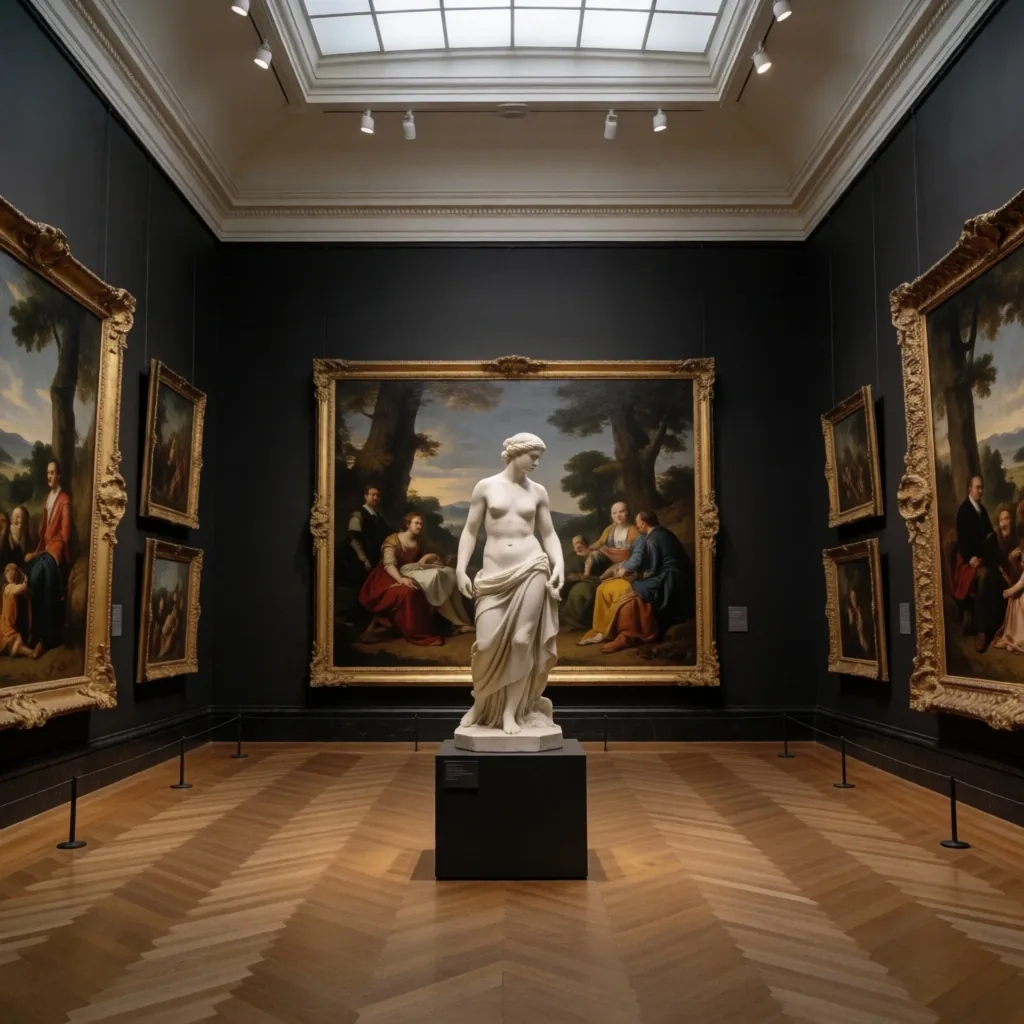
Fine art museums hold the aesthetic and historical record of human creativity — paintings, sculptures, decorative objects, and works on paper. In the United States these range from encyclopedic institutions that survey five thousand years of global art to small contemporary spaces that exhibit artists working today.
Encyclopedic Collections
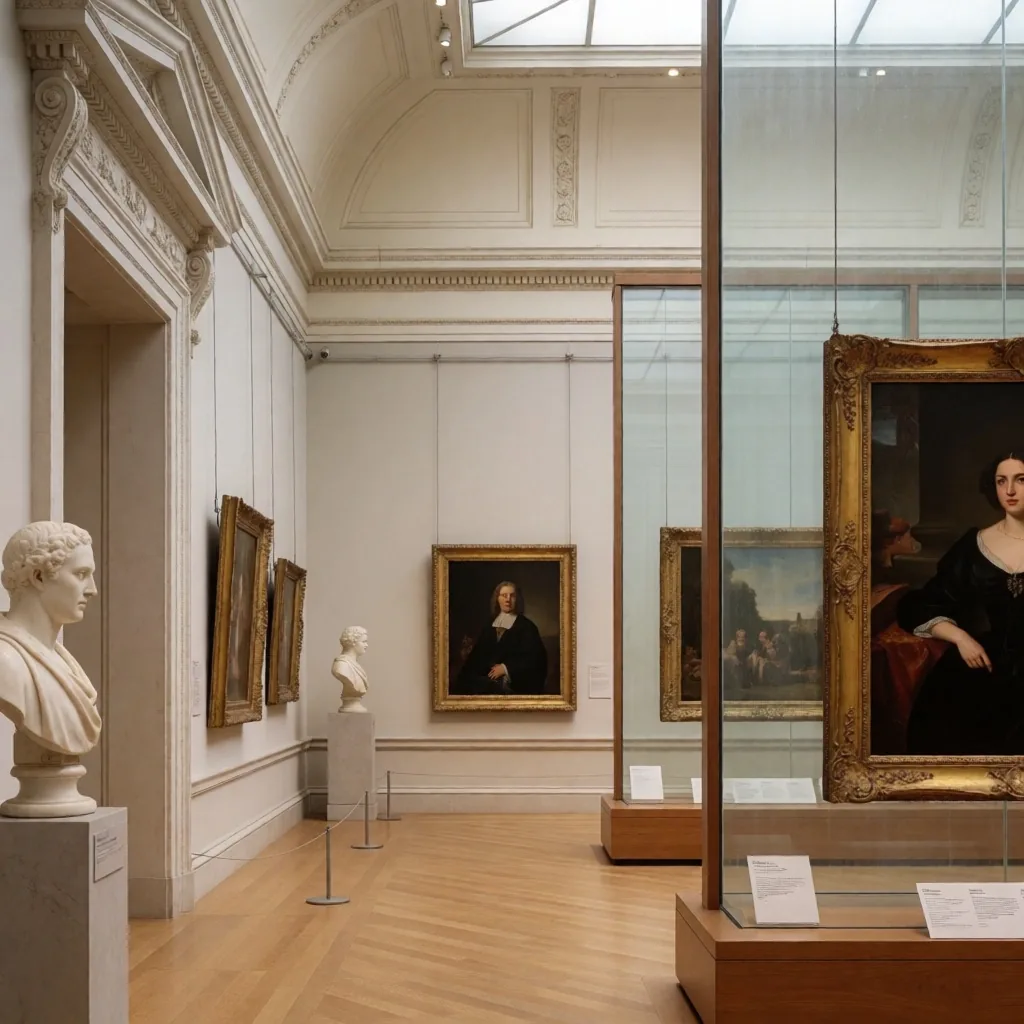
Institutions like the Metropolitan Museum of Art and the Art Institute of Chicago cover every period and medium. Their galleries move from ancient Egyptian temples to European Old Masters to American decorative arts, often in the same building. These museums serve as research centers as well as public galleries, with curatorial departments organized by region and century.
American and Impressionist Art
A second tier of museums focuses more narrowly on American painting, sculpture, and decorative traditions. The Smithsonian American Art Museum, the Pennsylvania Academy of the Fine Arts, and the Munson-Williams-Proctor Arts Institute hold deep collections of American Impressionism, Hudson River School landscapes, and colonial-era portraiture.
Contemporary and Avant-Garde
Contemporary spaces — MoMA, the Whitney Museum of American Art, Dia:Beacon, and the Broad — exhibit living artists and postwar movements. Programming rotates frequently, and installation work, video, and performance often share space with painting and sculpture. Check current exhibition schedules before visiting, as gallery contents change every few months.
Natural History and Earth Sciences
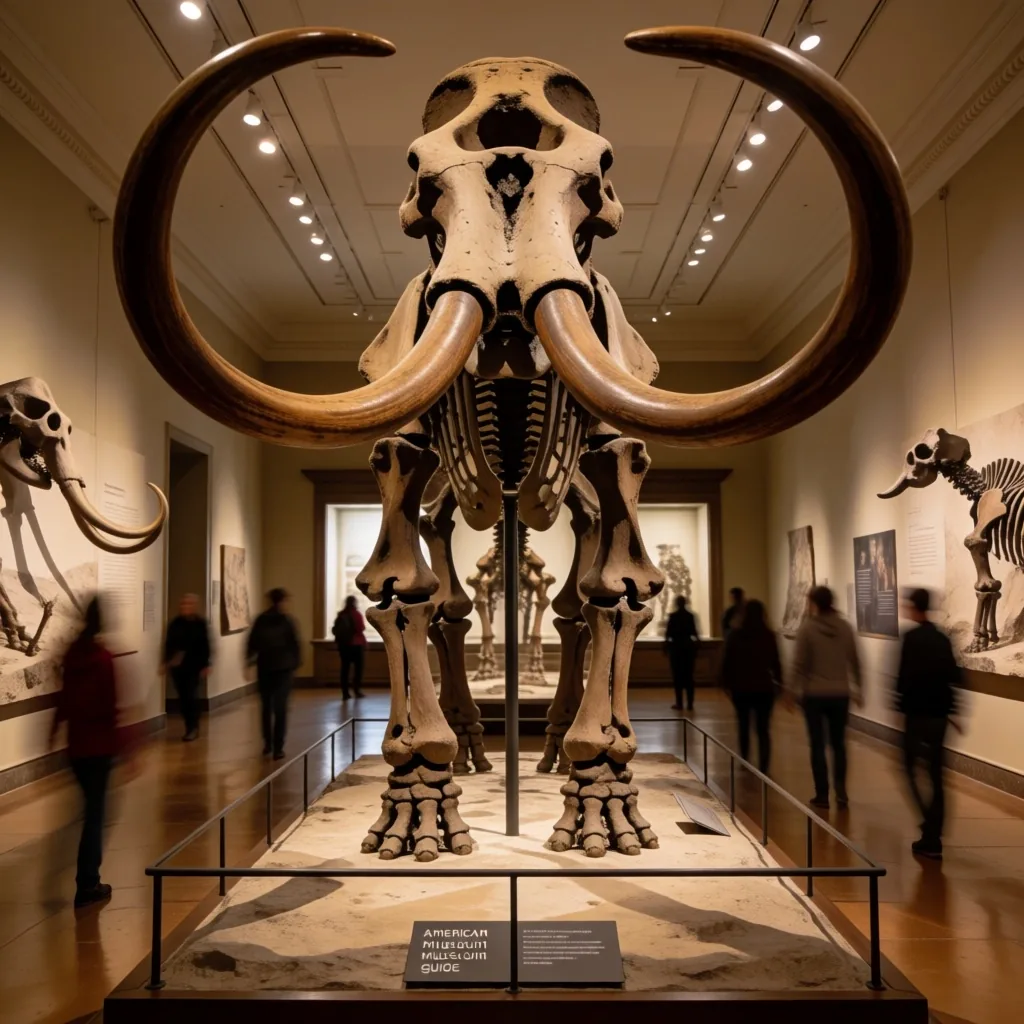
These institutions document the physical and biological history of the planet. Their collections include mineral specimens, fossil skeletons, preserved biological specimens, and anthropological materials gathered over more than a century of fieldwork. Many serve double duty as public exhibit halls and active research facilities, where curators publish studies on taxonomy, paleontology, and climate history.
The Smithsonian National Museum of Natural History in Washington, the American Museum of Natural History in New York, and the Field Museum in Chicago anchor this category. Their dinosaur halls, gemstone galleries, and ecosystem dioramas are the public face of institutions that also maintain vast behind-the-scenes research collections — millions of specimens catalogued and available to visiting scientists.
- 01 Fossil and dinosaur skeleton mounts, from full Tyrannosaurus rex specimens to marine reptiles
- 02 Mineral and gemstone galleries featuring cut stones and raw crystal specimens
- 03 Habitat dioramas with mounted specimens and painted backdrops depicting global ecosystems
- 04 Anthropology and human-origins exhibits covering early hominid fossils and indigenous cultural materials
History and Archival Research
Historical museums preserve the documents, clothing, tools, and everyday objects that tell the story of the American experience. Unlike art museums, which collect for aesthetic value, history museums collect for evidentiary value — an object matters because it was present at a particular moment, not because it is beautiful.
The category is broad. Presidential libraries operated by the National Archives hold the papers of administrations from Hoover through the present. Local historical societies keep town records, family photographs, and domestic artifacts in buildings that are themselves historic. Ethnic heritage museums — the Japanese American National Museum in Los Angeles, the National Museum of African American History and Culture in Washington — document communities whose stories intersect with but are not contained by the national narrative.
For researchers, these institutions often hold materials available nowhere else: handwritten letters, ship manifests, military service records, oral history recordings. Access policies vary. Some reading rooms are open to the public; others require an appointment and a statement of research purpose. Check the institution's website for registration requirements before you arrive.
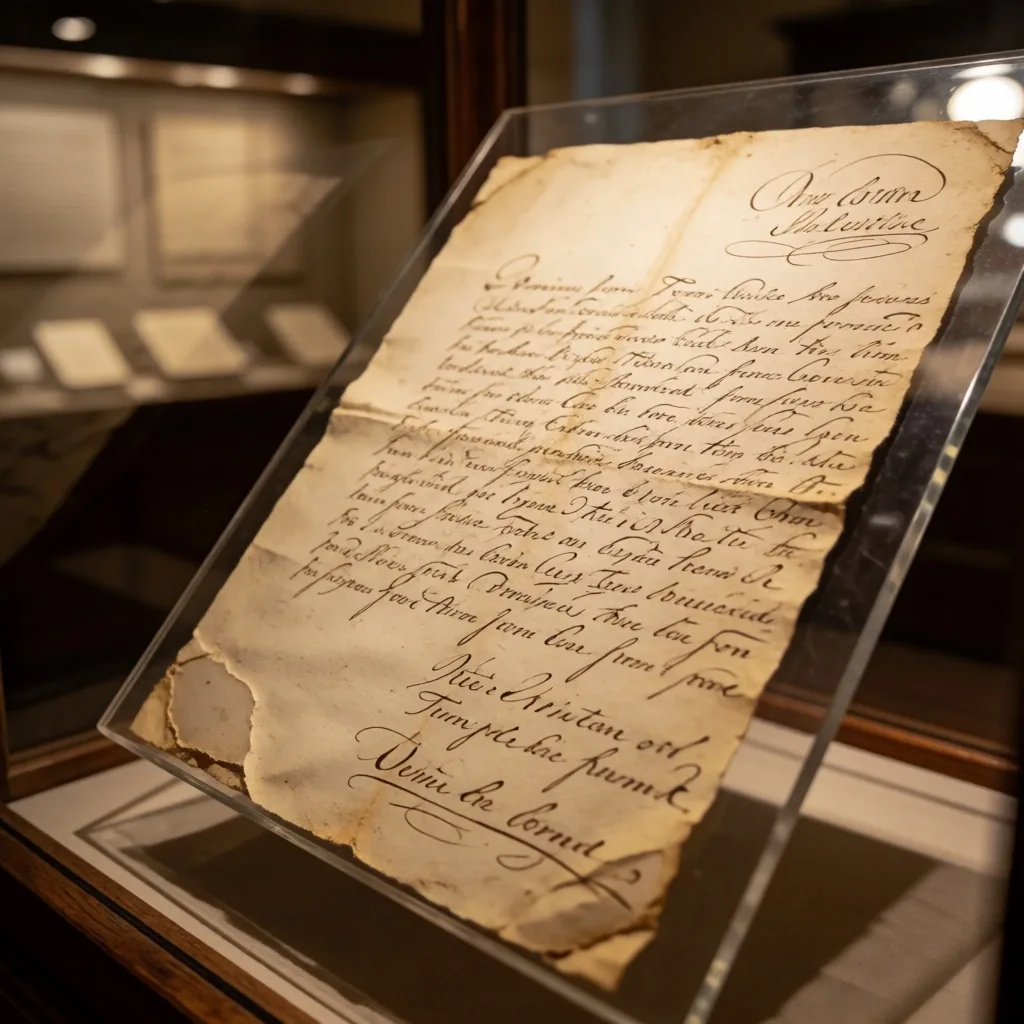
Many history museums require advance registration for archival reading rooms. Prepare a research topic and bring photo identification. Policies differ by institution.
Science, Technology, and Industry
Science centers and industrial museums focus on applied knowledge — the history of engineering, manufacturing, transportation, and communication. Many emphasize hands-on exhibits where visitors operate simple machines, build circuits, or test physics principles directly. The approach is especially suited to school-age visitors, but the underlying collections are serious: early telegraph equipment, steam locomotives, textile machinery, and prototype consumer electronics.
The Museum of Science and Industry in Chicago, the Henry Ford Museum in Dearborn, and the Exploratorium in San Francisco each represent a different approach — industrial heritage, American innovation, and interactive experimental design respectively.
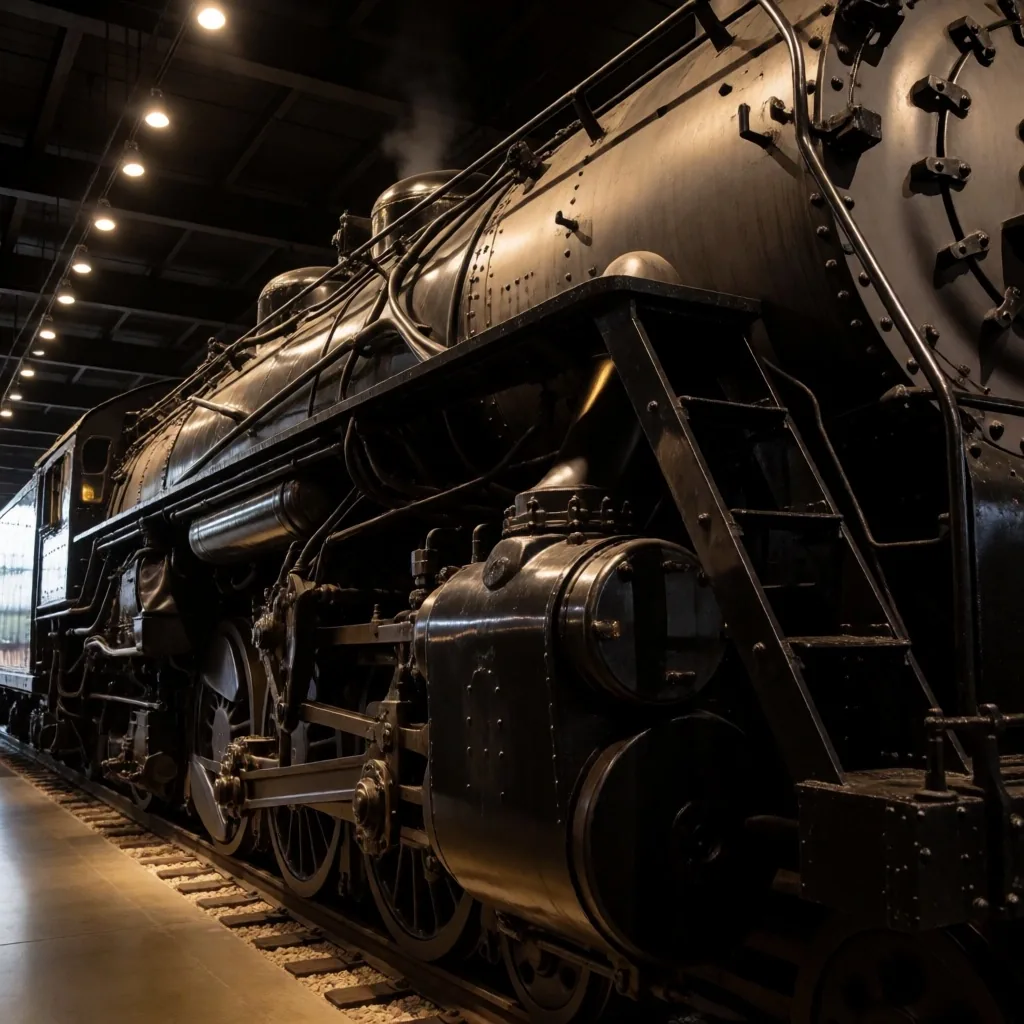
What These Museums Preserve
Locomotives, early automobiles, aircraft frames, and maritime engines tracing American mobility.
Textile looms, assembly line equipment, and machine tools from the industrial revolution forward.
Telegraph apparatus, early telephone switchboards, radio transmitters, and computing hardware.
Hands-on stations demonstrating physics, optics, and engineering principles for all ages.
Aerospace and Aviation History
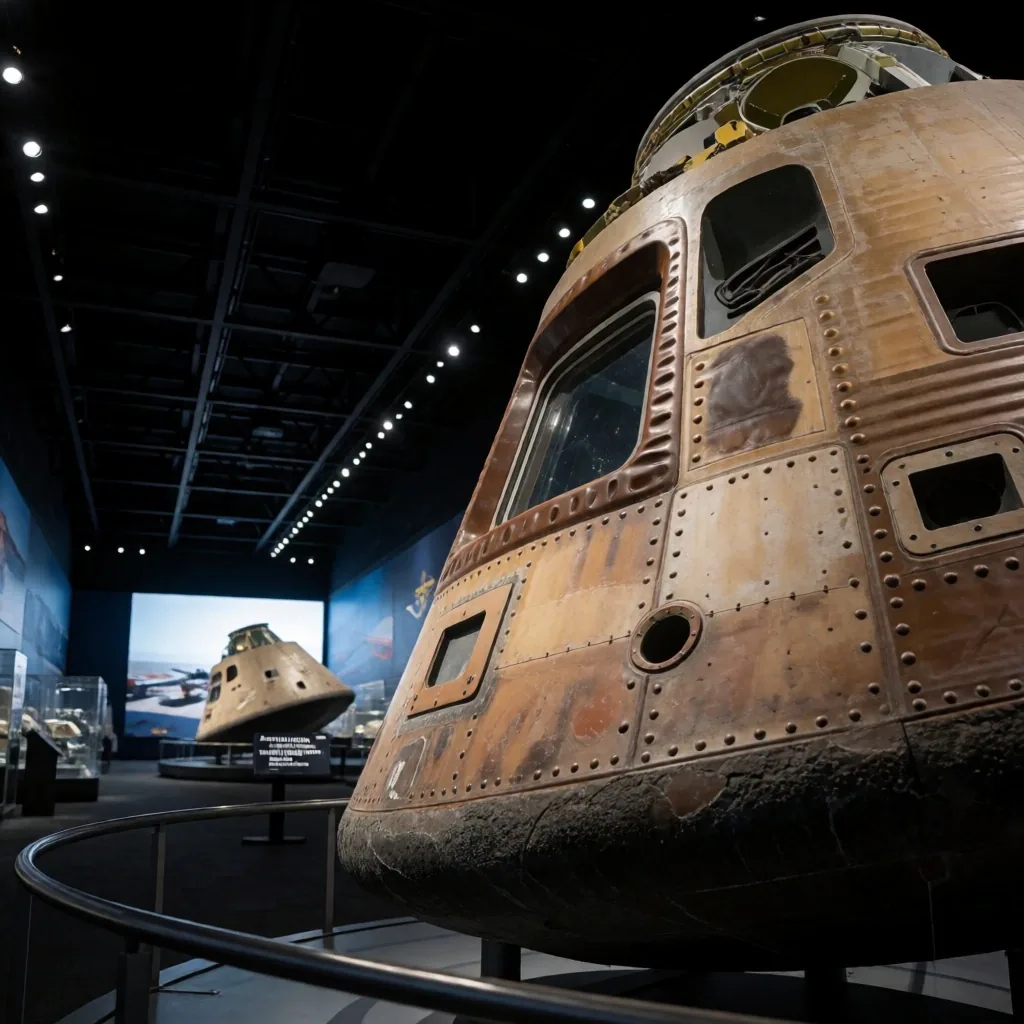
The United States holds a significant legacy in flight and space exploration, and specialized museums across the country preserve the actual hardware. These are not scale models or replicas — they are the aircraft, spacecraft, and supporting equipment that flew missions or served as engineering test articles.
The Smithsonian National Air and Space Museum on the National Mall and the Steven F. Udvar-Hazy Center in Virginia hold the core national collection: the Wright 1903 Flyer, the Spirit of St. Louis, the Apollo 11 command module Columbia, and the space shuttle Discovery. The Kennedy Space Center in Florida and the Museum of Flight in Seattle extend the network, adding launch infrastructure, mission control rooms, and commercial aviation airframes to the picture.
Visiting Note The Udvar-Hazy Center and the Museum of Flight require several hours to tour properly. Both have aircraft and spacecraft displayed at full scale in hangar environments — wear comfortable shoes and check for timed-entry requirements during peak seasons.
Children's Museums and Interactive Learning
Children's museums are built for younger visitors — typically from toddler age through early adolescence — and prioritize tactile, play-based learning over passive display. Instead of labels and vitrines, you find water tables, building workshops, climbing structures, and role-play environments scaled to small bodies. The exhibits map to developmental milestones: fine motor coordination, early literacy, cause-and-effect reasoning, and social collaboration.
Institutions like the Children's Museum of Indianapolis, the Boston Children's Museum, and the Please Touch Museum in Philadelphia anchor this category. Many incorporate STEM stations — simple circuits, magnetic ramps, light tables — alongside arts studios and pretend-play zones. The environments are designed for adult-child interaction, not drop-off; expect to participate alongside your child.
For families traveling with children, these museums offer a reliable indoor option that balances the more contemplatory pace of art and history museums. Most provide nursing rooms, stroller parking, and on-site cafés. Advance tickets are recommended on weekends and school holidays.
Specialized Cultural Heritage
These museums document specific communities, identities, and cultural traditions. They provide platforms for histories that broader institutions often treat only in passing — offering depth, context, and community-authored interpretation rather than a single paragraph in a survey exhibit.
Indigenous Heritage
The National Museum of the American Indian, with locations in Washington and New York, holds one of the world's largest collections of Native American artifacts. Regional institutions — the Museum of Indian Arts and Culture in Santa Fe, the Mashantucket Pequot Museum in Connecticut — add local depth and community-specific perspectives.
Community Histories
The Japanese American National Museum in Los Angeles documents incarceration, migration, and community life. The National Museum of African American History and Culture covers the full sweep of the Black American experience. The Tenement Museum in New York tells immigrant stories through preserved apartment interiors.
Why These Matter
Specialized heritage museums often collect oral histories, community photographs, and everyday objects that major institutions overlook. Their curatorial teams frequently include community members, and their exhibitions reflect ongoing conversations rather than settled scholarship.
Botanical Gardens and Living Collections
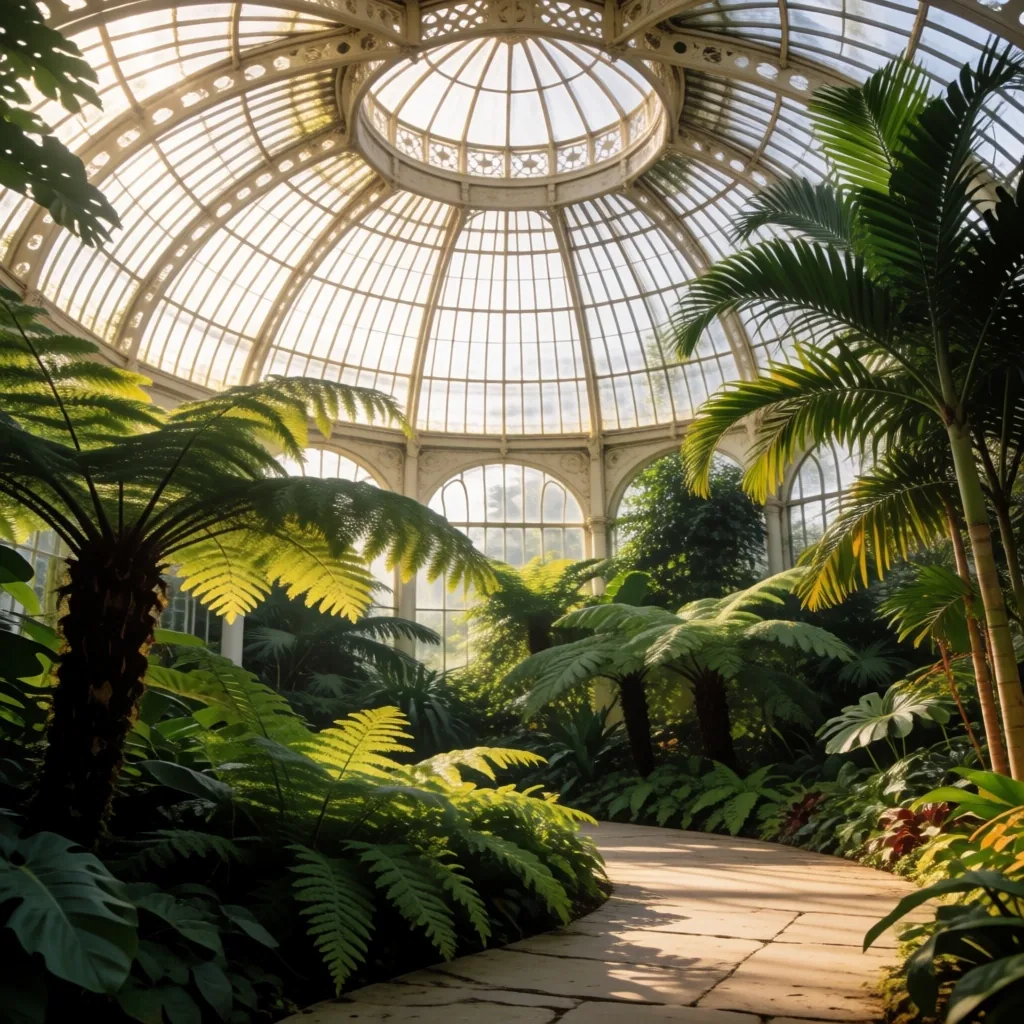
Many botanical gardens operate as accredited museums with curated living collections rather than static displays. Their holdings are plants — labeled, catalogued, and maintained with the same rigor an art museum applies to paintings. Behind the public displays, these institutions maintain herbariums (pressed plant reference collections), seed banks, and research programs in conservation and horticulture.
The New York Botanical Garden, the Missouri Botanical Garden, the Huntington Library and Botanical Gardens, and the United States Botanic Garden are among the major accredited institutions. Their seasonal displays — spring bulb gardens, summer perennial borders, autumn foliage, and winter conservatory shows — make them worth visiting year-round, not only during peak bloom.
How This Directory Is Organized
American Museum Hub sorts institutions by their primary collection focus — the type of material they collect, preserve, and interpret. Some museums span categories; the Smithsonian Institution alone operates museums in art, history, science, and cultural heritage. Where a museum fits more than one category, we list it under its dominant collection type and cross-reference it where relevant.
Our directory focuses on museums located within the United States. For state-by-state browsing, use the State-by-State Guide. For practical planning — hours, admission policies, accessibility — visit the Planning Your Visit page.
We list accredited museums, institutional members of the American Alliance of Museums, and notable independent collections with regular public hours.
Museum hours, exhibitions, and admission policies change. Always confirm details on the institution's own website before traveling.
Common Questions About Museum Categories
Answers to questions visitors frequently ask when browsing collections by type.
What is the difference between an art museum and a gallery?
Museums hold permanent collections with curatorial stewardship, conservation staff, and long-term exhibition programs. Galleries — particularly commercial galleries — typically exhibit work for sale, with rotating shows and no permanent holding. Some contemporary art centers use "gallery" in their name but operate as museums with collections and educational missions.
Are botanical gardens really museums?
Many are. Accredited botanical gardens maintain curated living collections, documented accessions, and research herbariums under the same professional standards as traditional museums. The American Alliance of Museums accredits botanical gardens alongside art, history, and science institutions.
Which category does a museum fall under if it covers multiple subjects?
We assign a museum to the category that represents its dominant collection focus — the area where it holds the deepest holdings and maintains the most active curatorial program. Museums that genuinely span categories appear in multiple sections where the overlap is substantial.
Do history museums allow public access to archival materials?
Policies vary. Some institutions open reading rooms to any visitor with photo identification. Others require advance registration, a research statement, or an institutional affiliation. Presidential libraries operated by the National Archives generally welcome researchers but ask that you contact them ahead of time to request specific materials.
How do I find museums in a specific state?
Use the State-by-State Guide to browse institutions by location. This collections page sorts by type; the state guide sorts by geography so you can see what is available near your destination.
Where to go from here
Once you know which collection type interests you, the next step is narrowing by location and planning the practical details — hours, tickets, travel routes, and accessibility.